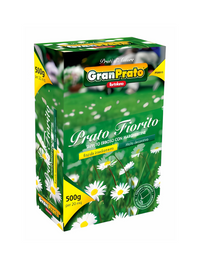
A flowering lawn not only adds a striking visual aesthetic to the garden but also contributes to biodiversity by attracting pollinating insects such as bees and butterflies. A flowering lawn with a good aesthetic and highly decorative appearance can transform any green space into a small natural paradise. Here is a detailed guide on how to create and maintain a high-quality flowering lawn, with rapid establishment and high planting density.
Characteristics of a Flowering Lawn
-
Good Aesthetic Appearance: A flowering lawn offers an explosion of colors and different textures that change with the seasons. The presence of flowers like daisies (Bellis perennis) provides a delicate and natural look, creating a welcoming and pleasant environment.
-
High Planting Density: The high density of plants allows for rapid ground cover, preventing weed growth and ensuring a uniform and compact lawn.
-
Rapid Establishment: The species selected for the flowering lawn are generally quick to germinate and establish, allowing for a complete lawn in a short time.
Package Contents
Inside the box, you will find two main elements:
-
Lawn Seed: A mixture of grass seeds that forms the base of the turf. This mixture is designed to ensure dense and uniform growth, ideal as a substrate for flowers.
-
Daisy Seed: A packet of daisy seeds (Bellis perennis) to be scattered over the lawn once the turf has been sown. Daisies add color and variety to the lawn, making it more decorative.
Sowing Procedure
-
Soil Preparation: Before sowing, it is important to prepare the soil adequately. This includes removing stones, roots, and debris, and potentially leveling the soil to ensure a uniform surface.
-
Sowing the Lawn:
- Distribute the lawn seeds evenly over the prepared soil.
- Lightly cover the seeds with a thin layer of topsoil or sand to protect the seeds and encourage germination.
- Water gently but thoroughly to keep the soil moist until the seeds begin to germinate.
-
Sowing the Daisies:
- Once the turf has started to establish, scatter the daisy seeds over the lawn.
- You can mix the daisy seeds with a little sand to distribute them more evenly.
- Water again to promote the germination of the daisy seeds.
Maintenance of the Flowering Lawn
To maintain a healthy and decorative flowering lawn, follow these guidelines:
-
Irrigation: Keep the lawn consistently moist, especially during the initial growth phases. Avoid waterlogging, which could damage the seeds.
-
Mowing: Mow the lawn regularly, but not too short. A mowing height of about 5-7 cm is ideal to encourage flower growth without smothering the grasses.
-
Fertilization: Use slow-release organic fertilizers to nourish the lawn without causing excessively rapid growth that could harm the daisies.
-
Weed Control: Monitor the lawn for weeds and remove them manually or with natural methods to avoid the use of chemicals that could damage the flowers.
Advantages of a Flowering Lawn
-
Aesthetics: A flowering lawn is visually appealing and can transform any outdoor space into a picturesque and inviting environment.
-
Biodiversity: Flowers attract pollinators and other beneficial insects, contributing to the health of the local ecosystem.
-
Low Maintenance: Once established, a flowering lawn requires less maintenance than a traditional lawn, thanks to its weed resistance and self-seeding ability.

 EUR
EUR